
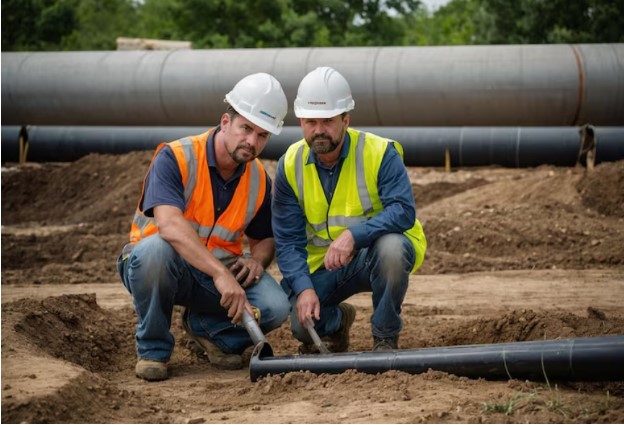

Installing new utility lines such as water pipes, gas lines, electrical conduits, and telecom cables is an important part of modern infrastructure development. Traditional digging methods can be slow, disruptive, and costly, especially in busy urban or sensitive areas. This is where directional boring plays a major role. It offers a modern, trenchless solution that improves efficiency while reducing surface disruption. By using advanced drilling techniques, utility installation projects become faster, safer, and more organized.
What is Directional Boring?
Directional boring is a trenchless construction method used to install underground utilities without the need for large-scale open excavation. Instead of digging long trenches, a small entry and exit point are created, and specialized drilling equipment is used to guide pipes or cables underground along a planned path.
This method allows contractors to install utilities under roads, rivers, buildings, and landscaped areas without disturbing the surface. Because of its controlled drilling process, directional boring provides a high level of precision, making it ideal for modern utility installation projects where accuracy and minimal disruption are important.
Faster and Less Disruptive Installation
One of the biggest advantages of directional boring is speed. Traditional excavation can take days or even weeks depending on the project size, especially when obstacles such as roads or existing infrastructure are involved. In contrast, directional boring significantly reduces installation time.
Since there is no need to continuously dig and refill long trenches, work progresses more smoothly. Traffic disruptions, road closures, and damage to public spaces are also minimized. This makes directional boring especially useful in crowded urban areas where maintaining normal activity is important. As a result, utility companies can complete projects faster while keeping inconvenience to a minimum.
Cost and Environmental Benefits
Directional boring also helps reduce overall project costs. Although the equipment used is specialized, the reduced need for heavy excavation, labor, and surface restoration often leads to significant savings. There is less need for repairing roads, sidewalks, and landscaping after installation, which lowers post-construction expenses.
From an environmental perspective, directional boring is also a more sustainable option. It reduces soil disturbance, limits damage to green spaces, and decreases the amount of waste material generated during construction. This makes it a preferred choice for projects that aim to balance development with environmental responsibility.
Better Accuracy and Long-Term Reliability
Another important benefit of directional boring is its precision. Advanced guidance systems allow operators to control the drilling path accurately, ensuring that utilities are installed exactly where needed. This reduces the risk of damaging existing underground infrastructure such as water lines, gas pipelines, or communication cables.
Accurate installation also improves the long-term reliability of utility systems. Proper alignment and depth control help reduce future maintenance issues, leaks, or service interruptions. This makes directional boring not only efficient during installation but also beneficial for long-term performance.
Conclusion
Directional boring has transformed the way utility installation projects are carried out. By offering a trenchless, efficient, and highly accurate method, it reduces disruption, saves time, and lowers overall costs. Its environmental benefits and precision make it a preferred choice for modern infrastructure development. As cities continue to grow and demand for utilities increases, directional boring will remain an essential solution for building reliable and efficient underground networks.